If you didn’t experience Bible camp as a child or teen, you may wonder how it can really be that important. I mean, can’t children receive the same benefits in summer programs through the local church? While I love the local church and all it does, summer Bible camp fills a different role and a different need.
Here are five reasons why you should consider sending your child to Bible camp this summer:
1. Concentrated Time in God’s Creation
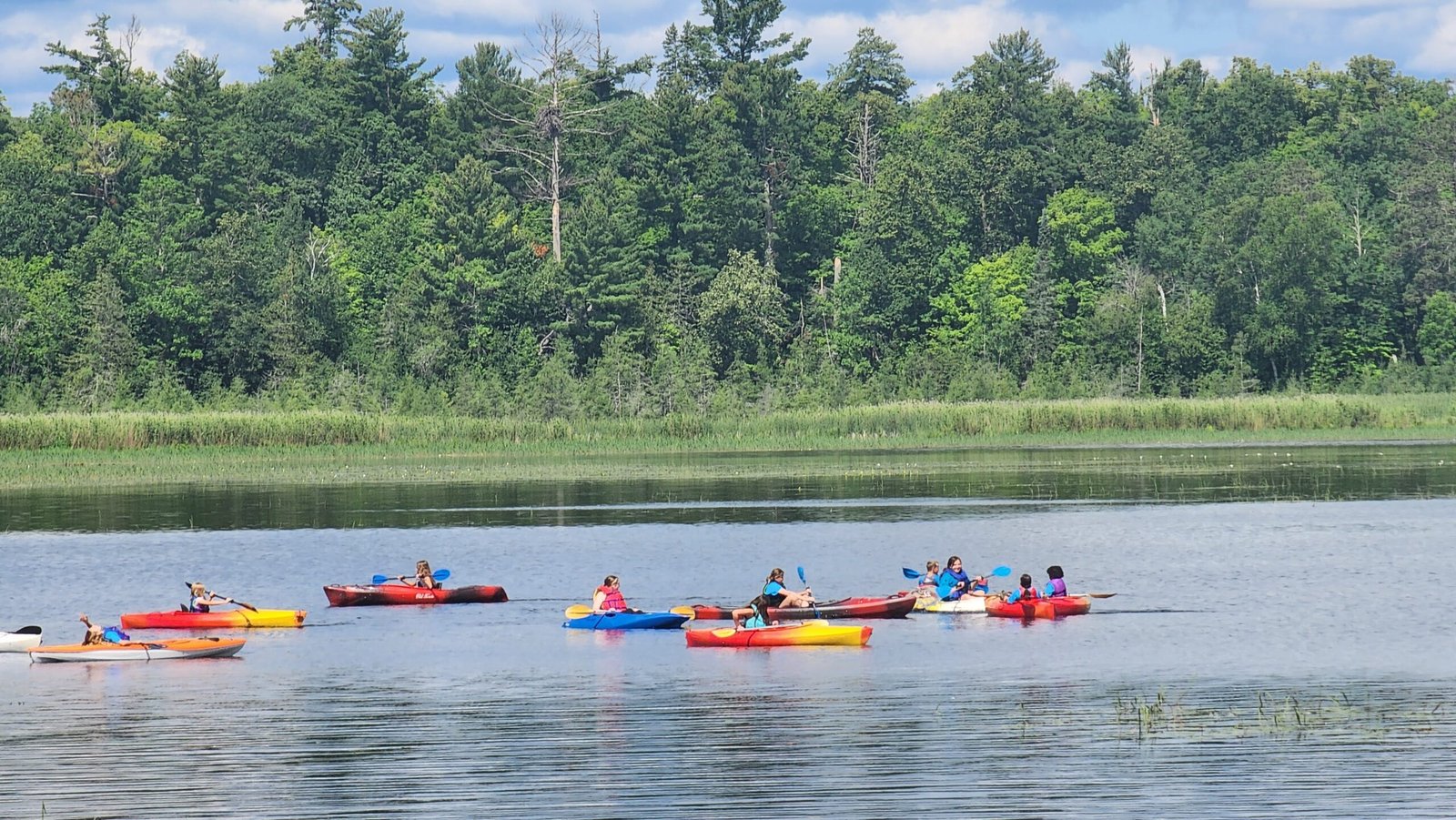
Even if you are intentional about getting your kids outside every day, they will spend more time outside at Bible camp. This is just the nature of how camp works. Camps are intentional about spending most of the day outside, immersed in God’s creation. There is a deeper wonder and understanding of God that comes through extended time in His creation. This is a time to escape the pressures of everyday life (and detox from screens) in an amazing environment!
The heavens declare the glory of God, and the sky proclaims the work of His hands. Day after day they pour out speech; night after night they communicate knowledge. There is no speech; there are no words; their voice is not heard. Their message has gone out to all the earth, and their words to the ends of the world. Psalm 19:1-4
2. Concentrated Time in Spiritual Conversations
During each day of Bible camp, your child is included in several times of intentional spiritual conversations: morning devotions (individual or group), cabin devotions, and chapel times. Camp staff has also been trained to use “teachable moments” to encourage campers in their faith.
As I heard over and over as a summer camp staff member, “All of life happens at camp,” and we (as staff) get the incredible opportunity to show the body of Christ in action and the application of faith as relevant for today.
While it won’t be done perfectly, it will be done with the intention of glorifying God in all things. As our culture moves farther (and farther) away from the knowledge of God, these very visible times of faith applied to “all of life” become even more important.
3. New Friends and Role Models
If 2020 taught us anything, it’s that relationships matter…and in-person relationships matter the most. One week at Bible camp is like one year (or more) in “real” life. The intensive time together and the abundance of shared experiences grows relationships quickly. Even if your child attends camp with a friend from home, their relationship will grow in ways it could not at home, and they will develop deep relationships with other campers and staff members.
I experienced God’s Providence over and over as a camp staff member when I saw how God placed campers in specific cabins with cabin leaders that could uniquely speak faith into their unique situations. I was amazed how over and over God used me to speak His Word into the lives of campers.
My daughter experienced God’s Providence in this way during her first summer at MBC: As I dropped my daughter off, I informed her cabin leader that our family was in the middle of a stressful summer with a grandma in hospice care due to cancer. I wanted the cabin leader to know that this was likely to come up in conversation throughout the week. This cabin leader gave me a hug and said that she understood; she had lost her to mom to cancer. The conversations my daughter had with this young woman, at camp and through letters after camp, have been very helpful and influential in my daughter’s life.
4. New Experiences
Campers are in a new environment and with (mostly) people they don’t know from “regular” life. This gives them the freedom to “re-invent” themselves through new experiences. An introverted child will make many new friends. A timid child may choose to try archery, go water skiing for the first time, or play on the Paddle North rafts. A “non-athletic” child may excel at Big Ball Super Circle Soccer. All these new experiences will give your child a broader view of themselves and increase their confidence.
5. Foster Independence (In a Safe Environment)
While cabin leaders are a very active and integral part of your child’s life at camp, there is still the independence gained from being away from home and parents for an extended time. Children are able to make choices and try new things that they may not while a parent is around. They also experience the natural consequences of their actions (in a safe environment): lost water bottles, sand in the bed, poison ivy, a belly ache from too much candy, etc.
So, maybe I’ve convinced you to consider a Bible camp experience for your children, but how do you know if your child is ready for camp? And which Bible Camp would be best for your child? Stay tuned for the rest of the posts in this series!
